Tag: uncertainty

  • Life on Another Planet: What If We Are Looking for the Wrong Thing?

    Life on Another Planet: What If We Are Looking for the Wrong Thing?

    We humans have evolved according to the conditions of our home planet, Earth.

    We need oxygen to breathe, water to survive, food for energy and a particular range of temperature to function properly. Our bodies are essentially a product of the environment in which we evolved.

    The same applies to other creatures.

    Fish live in water because their bodies are adapted to that environment. Take a fish out of the ocean and it won’t suddenly say, “Let me try living on land today.” 😂

    It simply cannot survive there for long.

    So here comes an interesting question:

    Why do we assume that life on another planet must have conditions similar to those required by us?

    What If Alien Life Needs Completely Different Things?

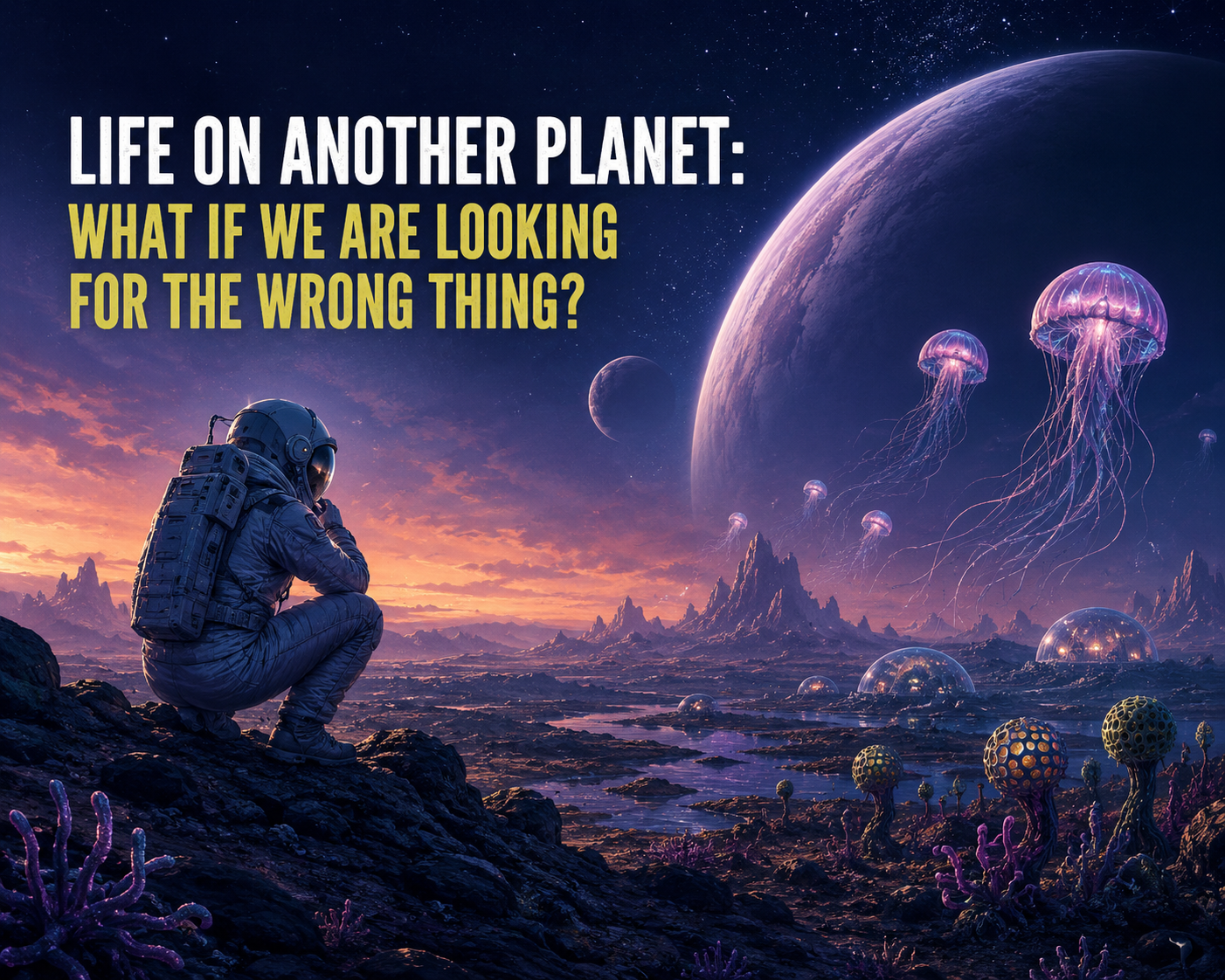
    When scientists search for life beyond Earth, we often look for things that are familiar to us—water, suitable temperatures, an atmosphere and other conditions that could support life as we understand it.

    But what if life somewhere else has evolved completely differently?

    Perhaps they don’t need water.

    Perhaps they don’t breathe oxygen.

    Perhaps they don’t eat vegetables, fruits, bread or pizza. 😄

    Maybe they obtain energy from chemicals, minerals or even metals that would be completely useless to us.

    Their biology could be so different that our definition of “life” might not even recognise them immediately.

    What Would They Look Like?

    Now comes the fun part.

    Why should an alien have two hands, two legs, two eyes and one head?

    They could have four hands, six eyes, ten legs—or no eyes at all.

    They could be enormous.

    They could be microscopic.

    They might have bodies made of structures we have never encountered before.

    And perhaps they could exist in a form that is invisible to our eyes because human vision can detect only a limited portion of the electromagnetic spectrum.

    Imagine meeting an alien for the first time.

    We might look at them and scream:

    “MONSTER!” 👽

    And they might look at us and think:

    “What is this strange two-legged creature doing here?” 😂

    Both of us could be equally terrified.

    Earth Already Shows Us How Strange Life Can Be

    The fascinating thing is that we don’t even have to leave Earth to see extraordinary forms of life.

    Our planet contains creatures that live in deserts, oceans, caves, glaciers and extremely harsh environments. Some organisms can survive conditions that would be lethal to humans.

    Life adapts to its surroundings.

    So perhaps an alien organism would simply be the ultimate example of adaptation.

    On Mars, Jupiter’s moons, or some distant exoplanet, life—if it exists—could have developed under conditions completely unfamiliar to us.

    It might not look like an animal.

    It might not eat what we call food.

    It might not breathe what we call air.

    It might not even resemble anything we have ever imagined.

    Are We Looking for Life That Looks Like Us?

    Maybe that’s the real question.

    We are searching the universe using Earth as our reference point.

    But perhaps the universe has a much bigger imagination than we do.

    Maybe somewhere out there is a life form that would make us question everything we thought we knew about biology.

    And perhaps, when we finally discover it, our first reaction won’t be:

    “We found aliens!”

    It might simply be:

    “Wait… that’s alive?” 😂

    The universe is unimaginably large, and we have explored only a tiny fraction of it.

    So maybe life beyond Earth isn’t necessarily waiting for us to find another Earth.

    Maybe we should be prepared to find something that is nothing like Earth at all.

    And honestly…

    isn’t that much more interesting? 🌌👽
  • The Ocean: Earth’s Secret Kingdom

    The Ocean: Earth’s Secret Kingdom

    We all know that the ocean is enormous. It covers most of our planet, yet a surprisingly large portion of the deep ocean remains unexplored.

    And that makes me wonder…

    What exactly is hiding down there?

    We have discovered bizarre creatures, enormous underwater landscapes and ecosystems that look almost alien. But somehow, the stories of mermaids have survived for centuries too.

    Nobody has produced scientific evidence that mermaids exist.

    But then again…

    How confident are we about a place we have barely explored? 👀

    What If There Is An Intelligent Species Underwater?

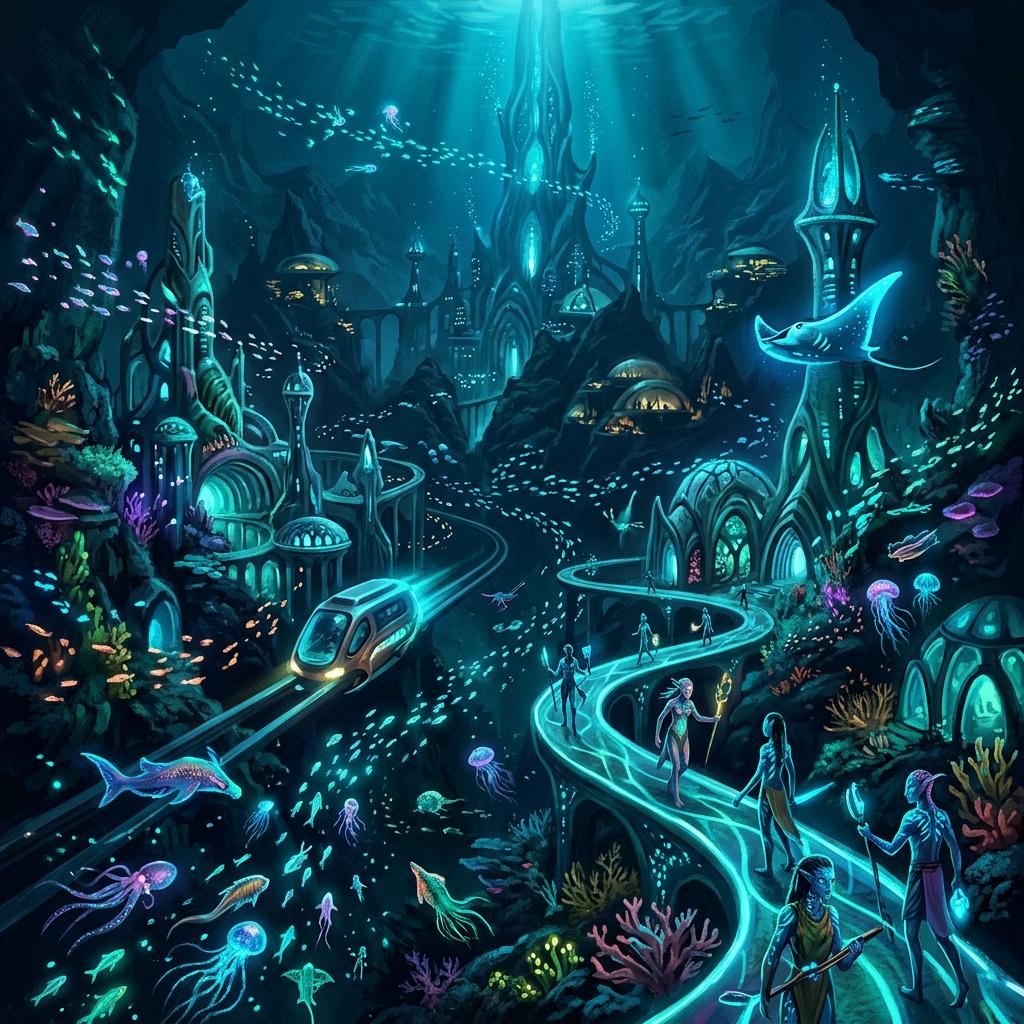
    Imagine that somewhere deep beneath the ocean, there is an intelligent species.

    Let’s call them mermaids for now. 😄

    Perhaps they have their own cities, their own languages, their own rules and maybe even their own version of social media.

    And here’s the interesting part:

    What if they already know about us?

    Maybe they have been observing humans from a safe distance and have decided that getting involved with us is simply not worth the trouble.

    Honestly, I wouldn’t blame them.

    Humans fight over land, resources, borders and sometimes even over parking spaces.

    The mermaids might be sitting comfortably at the bottom of the ocean thinking:

    “Let’s stay underwater. These surface people are exhausting.” 😂

    Maybe They Don’t Want To Meet Us

    What if this mysterious species has already explored the surface?

    Perhaps they came up, observed humans for a while and concluded:

    “Interesting planet. Beautiful trees. Lots of food. Terrible traffic. Let’s go back.”

    What if they have deliberately protected their world so that humans cannot enter it?

    We already do something similar.

    There are places on Earth that are difficult or dangerous to reach, and there are places we deliberately avoid disturbing because entering them could damage the ecosystem.

    So perhaps an intelligent underwater civilization could have its own protected territory.

    And maybe every time humans try to explore deeper, they are thinking:

    “Not again. They’re back.” 😆

    Different Oceans, Different Kingdoms?

    Now let’s make the theory even more interesting.

    What if there isn’t just one underwater civilization?

    Maybe different oceans contain different groups of intelligent aquatic species.

    One group could live in the Pacific.

    Another could inhabit the Atlantic.

    They might have different cultures, languages, traditions and even completely different ideas about how their society should function.

    Basically…

    Countries, but underwater.

    Instead of passports, perhaps they need special gills.

    Instead of airports, they have underwater highways.

    And instead of arguing about international borders, they argue about who owns that particular coral reef.

    Sounds ridiculous?

    Maybe.

    But the ocean is so vast that there are still countless things we haven’t discovered.

    The Ocean Has Its Secrets

    The scientific reality is that there is no confirmed evidence of mermaids or an advanced underwater human-like civilization.

    But the ocean has already surprised us many times.

    New species continue to be discovered, and deep-sea environments can be incredibly strange compared with the world we experience on land.

    So perhaps the real mystery isn’t whether mermaids exist.

    Perhaps the real mystery is:

    How much of the ocean is still waiting to surprise us?

    Maybe there is nothing down there except fish, strange creatures and enormous amounts of darkness.

    Or maybe, somewhere in the deepest part of the ocean, something is looking back at us.

    And if that happens…

    I just hope they are peaceful.

    Because if mermaids ever declare war on humans, we are seriously going to regret not learning how to breathe underwater. 😂🌊🧜‍♀️

    So, what do you think?

    Are mermaids just mythology… or could the ocean have its own secret civilization?

  • Déjà Vu: A Glitch in Time or a Memory From Another Life?

    Déjà Vu: A Glitch in Time or a Memory From Another Life?

    Have you ever experienced déjà vu?

    That strange and almost inexplicable feeling that you have already experienced the exact same moment before. You are somewhere, talking to someone, and suddenly your brain says, “Wait… haven’t we done this already?”

    Well, I have experienced it too.

    But what I never really understood was—what exactly is happening?

    Did this moment actually happen before? Was it something I saw in a dream and simply forgot? Is it just a strange coincidence? Or could it be that another version of me has already experienced this exact moment?

    Okay, that sounds a little crazy.

    But let’s imagine something even crazier.

    What If We Are Living in a Time Loop?

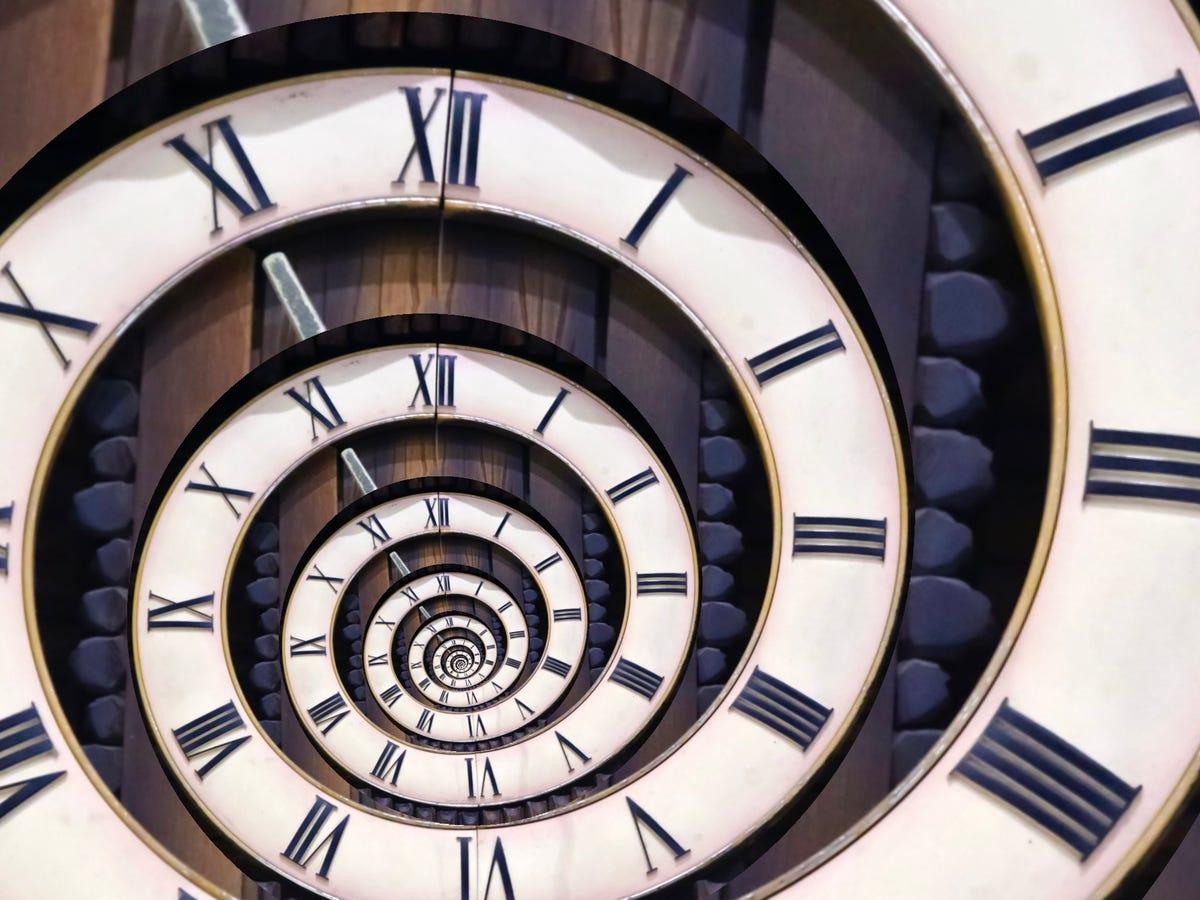
    We usually imagine time as a straight line:

    Past → Present → Future

    But what if it isn’t?

    What if time is actually a gigantic loop, and we have already lived this life before?

    Perhaps we have made the same decisions, met the same people, made the same mistakes and reached the same moments countless times. The only problem is—we don’t remember any of it.

    Maybe our minds are simply not designed to recognise the loop.

    And perhaps déjà vu is a tiny glimpse through the cracks.

    A brief moment where something inside our brain recognises what is happening before our conscious mind can understand it.

    Can We Break the Loop?

    Now comes the interesting part.

    What if the loop can actually be broken?

    Maybe every cycle gives us another opportunity to make a different choice. Perhaps we keep repeating certain experiences until we finally learn what we were supposed to learn.

    Interestingly, some spiritual philosophies talk about moksha, liberation from the cycle of birth and rebirth. Could that be considered another interpretation of escaping a cycle?

    Maybe.

    But what does science say?

    Well, science doesn’t currently have an answer.

    There is no evidence that we are literally living inside a repeating timeline. However, scientists do know that time is far more complicated than our everyday experience makes it appear.

    Perhaps one day, we will understand what time really is.

    Perhaps time loops will be proven impossible.

    Or perhaps we will discover something that completely changes our understanding of reality.

    Until then, the next time you experience déjà vu, don’t immediately blame your brain.

    Pause for a moment and ask yourself:

    “Have I experienced this before… or am I experiencing it again?”

    And if you suddenly feel that you already know what happens next…

    Well, maybe you’ve been here before.

  • Time → A Dimension

    Time → A Dimension

    We casually talk about the Universe as if there is only one.

    But what if there is more?

    Scientists have explored the possibility of multiple universes, separated by distances so enormous that even light would need an unimaginable amount of time to cross them.

    So naturally, the question is:

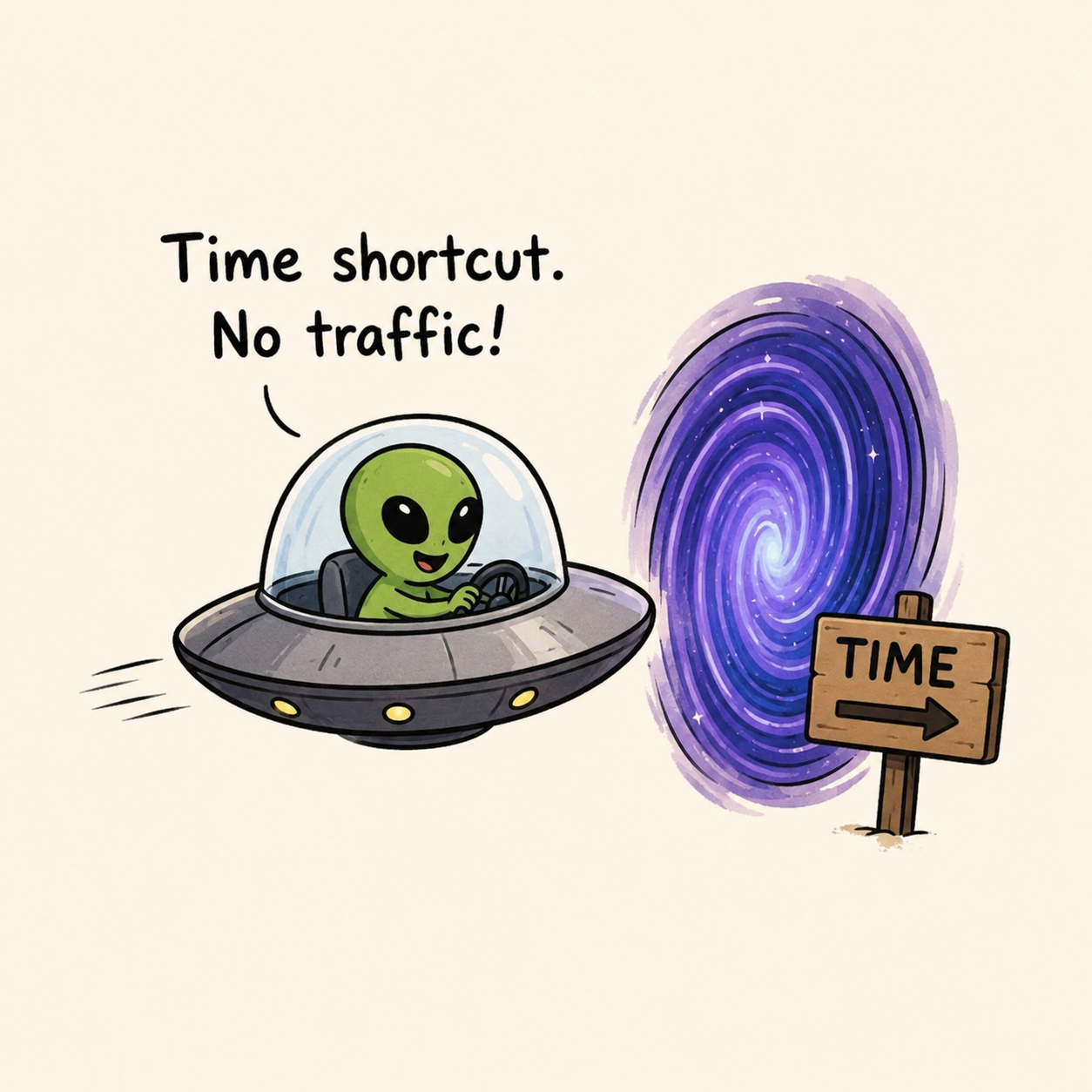
    Is there a shortcut?

    What If Time Is the Shortcut?

    We usually think of distance and time together.

    If Jammu is far away from Kanyakumari, the distance between them is fixed. If we travel faster, we simply reach there sooner.

    But there is another interesting trick.

    The distance between two places depends on how we measure it.

    The road distance between Jammu and Kanyakumari is much longer than the straight-line distance through the air. The destination hasn’t moved. We simply changed the path.

    And suddenly, the journey became much shorter.

    Now imagine adding another dimension.

    What if we could bend or change that dimension too?

    What if space isn’t the only thing we can manipulate?

    What if time itself is a dimension that can be altered?

    If space can give us shortcuts, perhaps manipulating time could give us even bigger ones.

    Maybe somewhere in the universe there are strange places where time doesn’t behave the way we expect. Maybe there are “shortcuts” connecting different points in space and time.

    And if, one day, we learn how to control them…

    Could we travel to the past?

    Could we see the future?

    Could we cross unimaginable distances almost instantly?

    Maybe time isn’t just something we measure with a clock.

    Maybe time is the road itself.

    Sounds crazy?

    Good.

    That’s usually where the interesting questions begin.

  • Probability: The Language of the Future

    Probability: The Language of the Future

    Have you ever wondered if the mathematics we study in school is actually a language for understanding life?

    Take probability.

    We use it every day, often without realizing it. Every decision we make changes the possibility of what happens next.

    Imagine walking across a road while a car is approaching. We can estimate the probability of an accident using a few parameters—car speed, our speed, distance, traffic, and road conditions.

    Now add more information: weather, visibility, other vehicles, pedestrians, traffic signals, driver behavior, and so on.

    The more relevant information we have, the better we can estimate the possible outcomes.

    Now imagine an AI system processing all of this continuously.

    It could tell us:

    “Based on everything happening right now, these are the most likely outcomes.”

    But the more interesting part is this:

    “If you change this one decision, the probability of that outcome changes.”

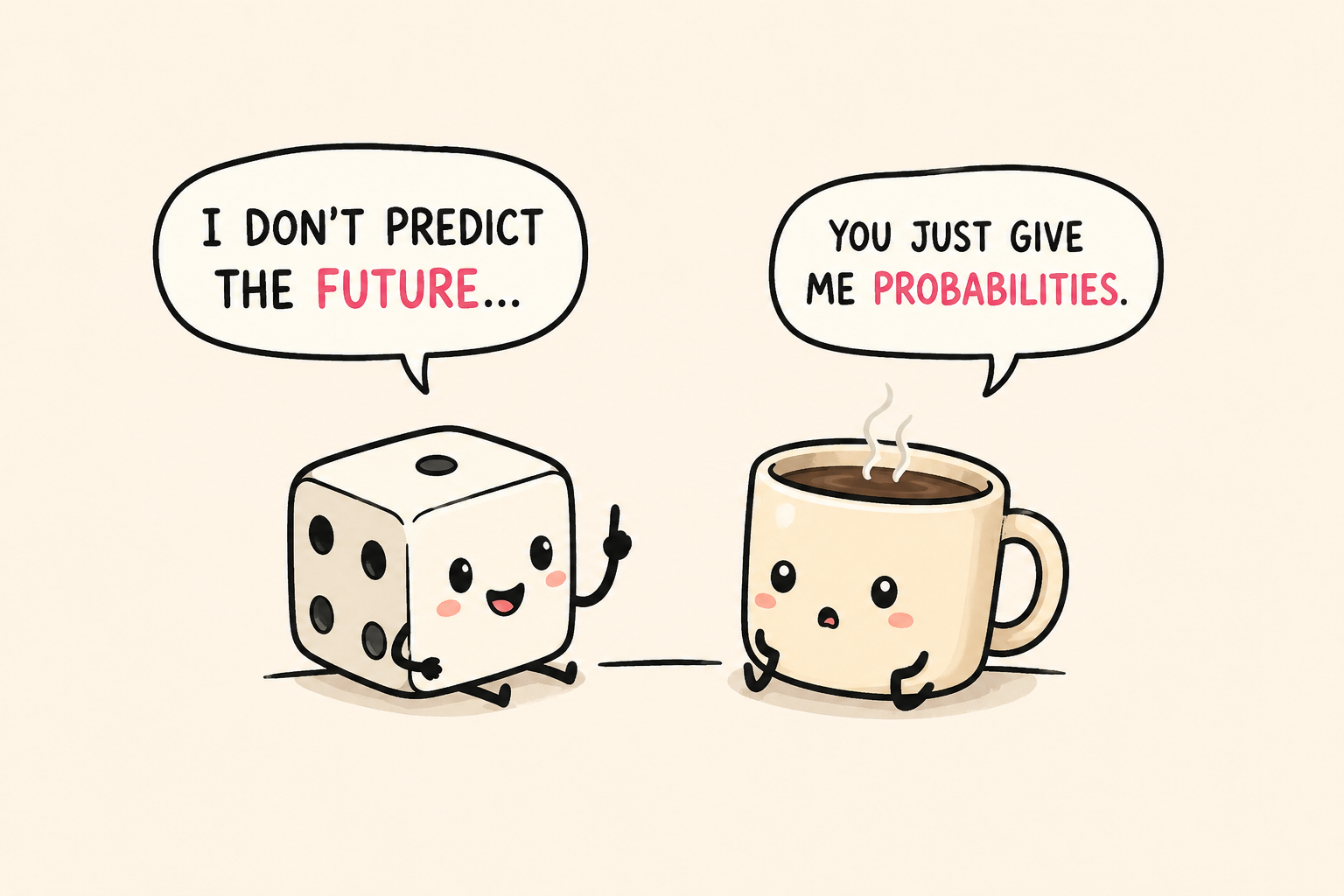
    That means AI isn’t just predicting the future. It is helping us understand how our present decisions can influence possible futures.

    Of course, probability can never guarantee exactly what will happen. There will always be unknown factors and randomness.

    But it can help us move from simply asking:

    “What will happen?”

    to asking:

    “What is most likely to happen, and what can I do to change it?”

    And perhaps this is where probability becomes more than mathematics.

    It becomes a language for understanding possibilities, decisions, and the future.

    Maybe one day, probability won’t just help us calculate the future.

    It will help us navigate it.