What if the most advanced robot ever created is not made of metal, but flesh, blood and questionable decisions?
The Age of Intelligent Machines
Artificial intelligence, robotics and autonomous systems are becoming increasingly capable of performing tasks once considered exclusively human.
Robots can calculate, communicate, recognise objects, navigate environments and complete repetitive work. This raises an intriguing question:
What if humans are doing something remarkably similar?
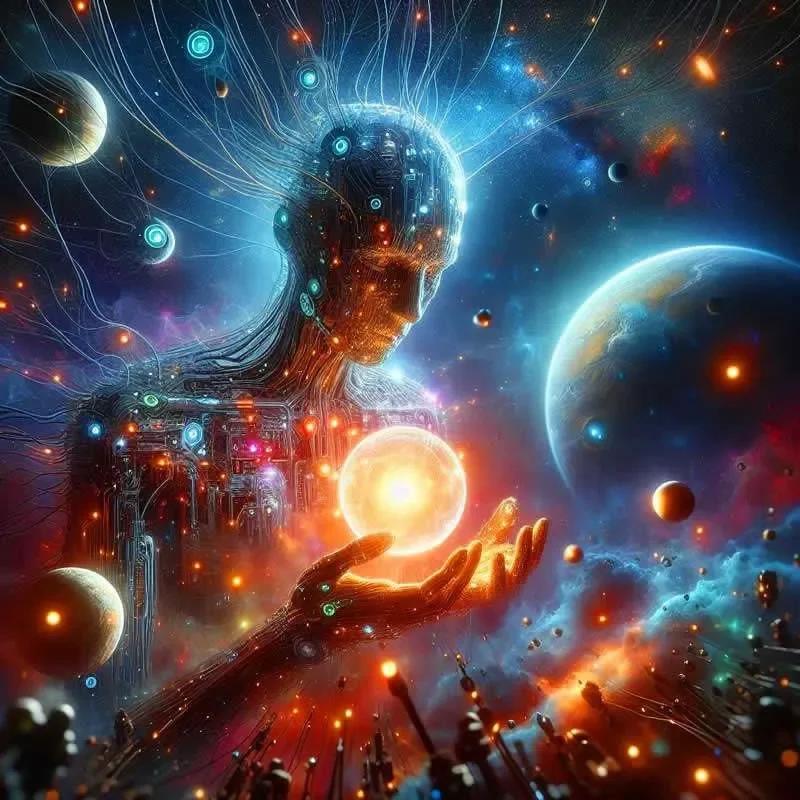
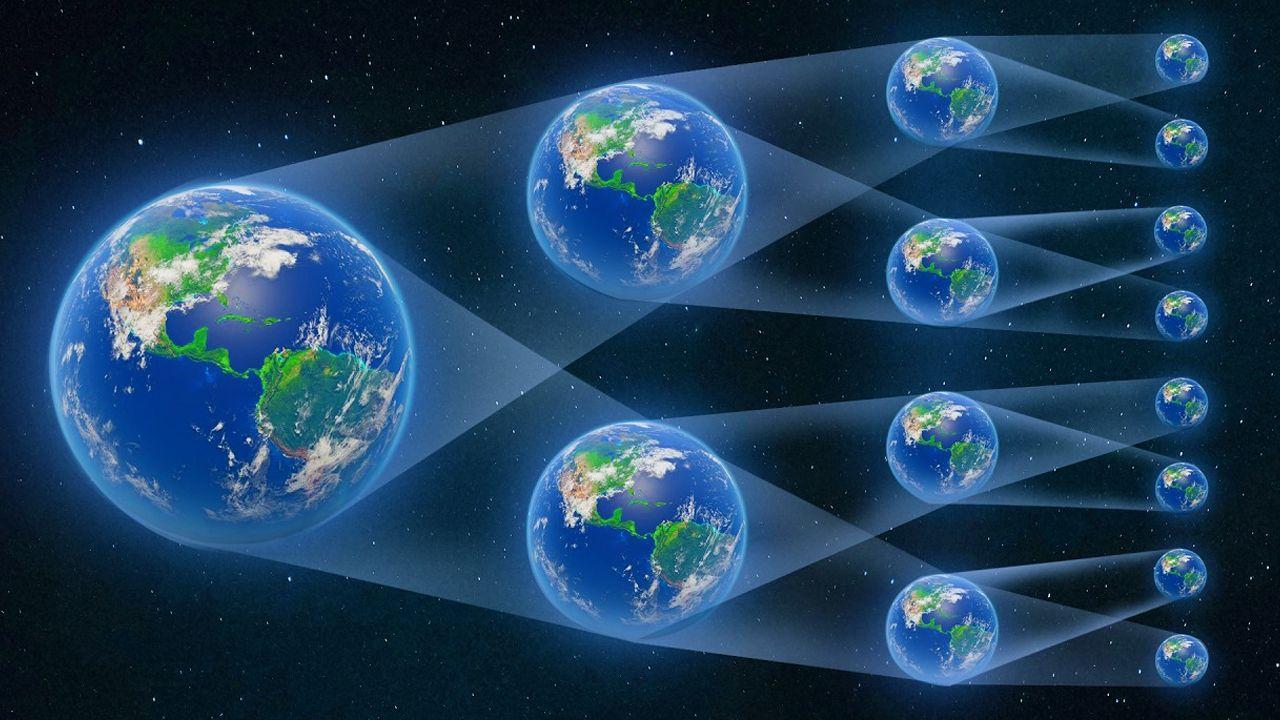
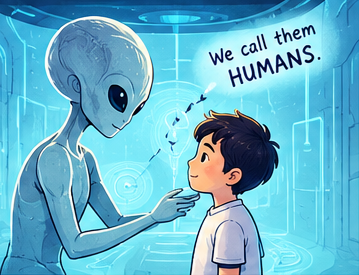
Perhaps we are not the creators of intelligent machines, but another form of them. Maybe an advanced extraterrestrial civilisation designed biological machines capable of surviving, reproducing and evolving independently.
And perhaps their most successful robot is standing in front of a mirror every morning.
Robots Have One Major Problem: Maintenance
Modern robots require electricity, repairs, software updates and replacement parts. They depend on infrastructure and human technicians.
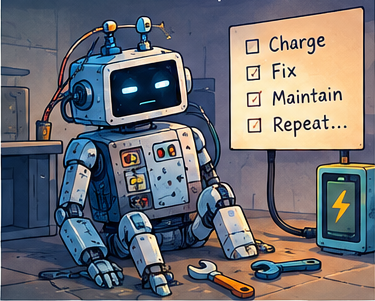
Imagine, however, a machine capable of self-repair, self-regulation, self-reproduction and resource acquisition. Instead of manufacturing millions of identical robots, its creators could design one biological system capable of reproducing itself.
Instead of manually repairing damage, the machine could heal. Instead of receiving food and energy, it could obtain them independently.
We already know something that behaves remarkably like this.
Us.
What If Somebody Built the “Human Model”?
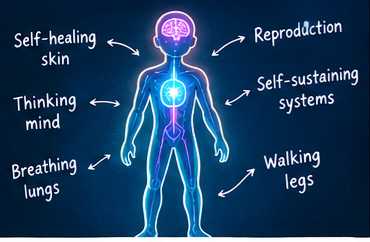
Imagine an advanced civilisation designing a biological machine. It would need legs for movement, lungs for respiration, a digestive system for energy, skin for protection and a nervous system for environmental interaction.
Then the creators would add a sophisticated processor: the brain.
The brain allows the machine to learn, adapt, communicate, invent tools and develop technologies its creators may never have anticipated.
They might call this experiment…
Humanity.
The Most Impressive Feature: Self-Repair
Our bodies possess extraordinary regenerative abilities. Small wounds heal, bones repair themselves, skin renews continuously and the immune system combats countless threats without conscious instruction.
Modern robots, meanwhile, may stop functioning because of one defective component.
Humans can become injured, sleep for several hours and declare the next morning:
“I think I’m fine.”
Perhaps biological engineering simply advanced robotics to an astonishing level.
DNA: The Biological Instruction Manual
DNA contains the instructions required to construct and maintain living organisms. Although it is not literally computer code, it can be compared to a biological instruction system governing cellular development, function and reproduction.
As a humorous science-fiction thought experiment, imagine someone discovering DNA thousands of years from now and saying:
“Wait a minute… somebody left the source code inside the robots!”
But We Are Not Completely Independent
If humans are autonomous biological machines, we still possess inconvenient requirements:
Food. Water. Oxygen. Sleep. Temperature regulation.

Without these, our supposedly sophisticated systems eventually fail.
Perhaps our creators designed us to obtain resources independently. They gave us lungs instead of oxygen supplies, hunger instead of food deliveries and biological instincts instead of mechanical commands.
The machine gathers resources, repairs itself, reproduces and educates the next generation.
Most remarkably, it believes it is completely independent.
Who Is Controlling the Machine?
If the body is the machine, what controls it?
The brain? Consciousness? Instincts? DNA?
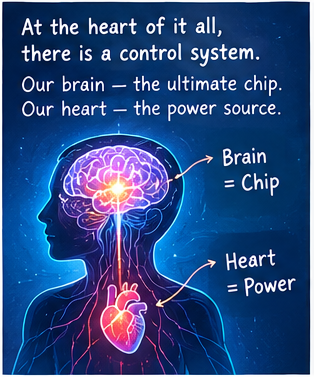
Our decisions emerge from an intricate interaction between biology, memories, emotions, environment and neural activity. Perhaps the brain is the control system, consciousness is the interface and DNA is the underlying instruction set.
Or perhaps reality is far more complex than we currently understand.
The Funny Part
Imagine humans creating an artificial species capable of repairing itself, reproducing, learning, adapting and designing technologies beyond our comprehension.
One day, such a machine might examine its own circuitry and ask:
“Who created us?”
We would proudly answer:
“Humans did.”
Then it might ask:
“Why?”
At that moment, we would realise that we had recreated the same mystery that has fascinated humanity for centuries.
The Final Question
There is no evidence that humans are extraterrestrial robots. Nevertheless, the idea challenges our definition of a machine.
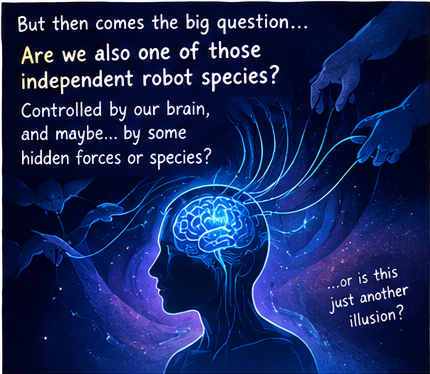
Perhaps a sufficiently advanced machine could be biological, self-repairing, reproductive, intelligent and capable of building a civilisation.
Perhaps it could become so sophisticated that it would forget it was ever a machine.
So, the next time you look into a mirror, remember:
You may be looking at a human, an extraordinarily complex biological organism—or simply somebody else’s robot.
And if that is true, I have only one question:
Where is the warranty card?